
TU Chemnitz A1 German Course: My personal Experience
3 March 2026
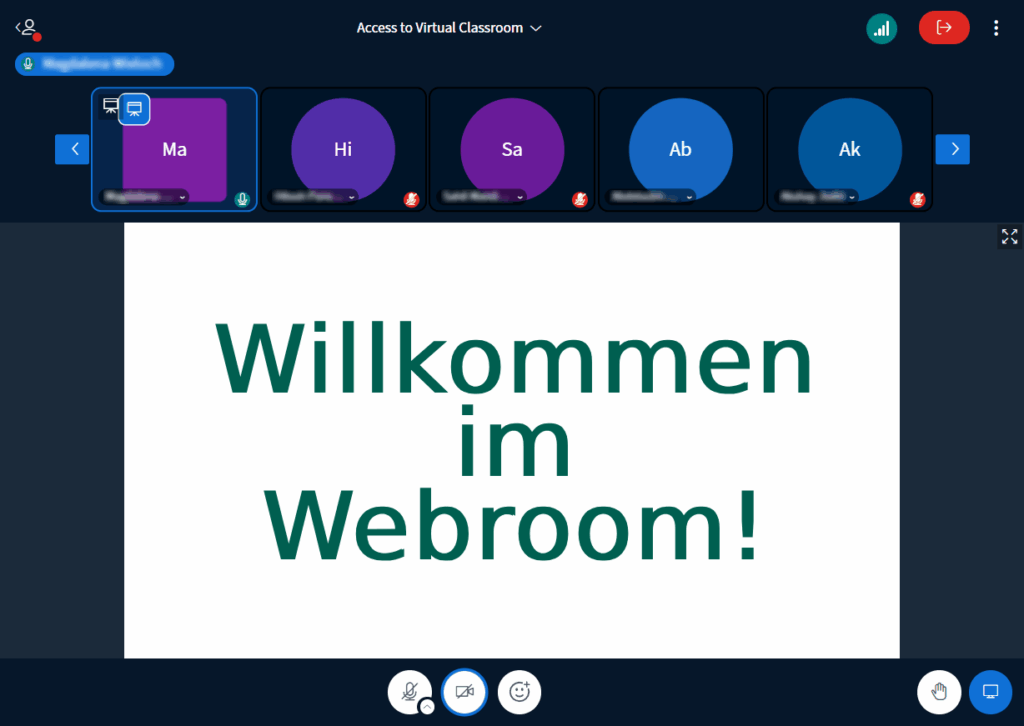
After I was conditionally accepted into full-time study at TU Chemnitz for the English-taught master’s program in embedded systems, there was one more thing I had to do. Either complete a preparatory German course at the A1 level offered by the university or submit a German language certificate from the Goethe-Institut, telc test centers, or the Austrian German Language Diploma (ÖSD). So, I decided to join the university’s own A1 Intensive German Language Course.
Registration
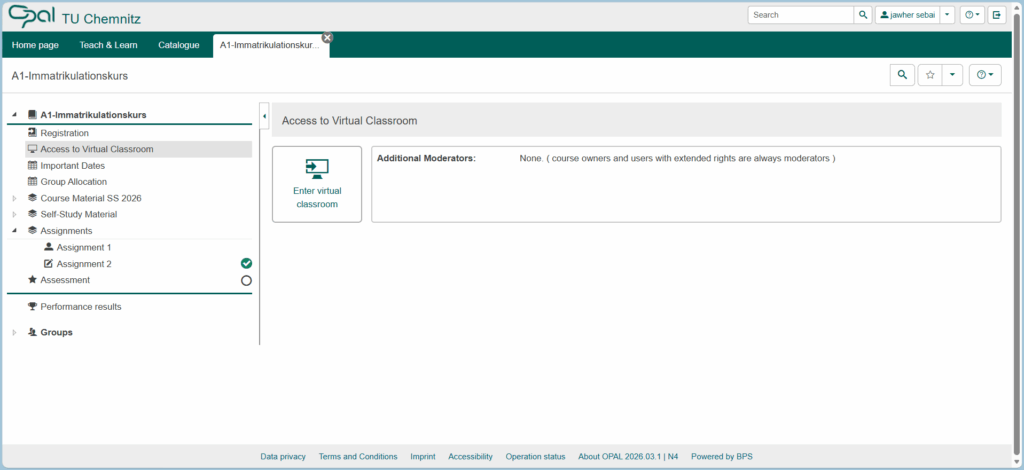
One week before the course began, I received an email to register for the course on the university’s platform, which is called ‘OPAL.’ What I really appreciated was that the registration process was fully explained within the email, including clear screenshots and exact guidance on how to use the system.
The course itself is a three-week intensive program. For my intake, it was scheduled from February 23rd to March 13th, 2026, with daily classes from 8:30 am to 11:45 am CET. Because it’s held online, having a stable internet connection is crucial, and you’re expected to have your camera and microphone on to participate. The university makes the course convenient by providing all the learning materials directly through the ‘OPAL’ system or during the live sessions with the teachers.
Assessment
One of the best things about this course is that your grade isn’t decided by a single, scary exam at the end. Instead, the assessment is based on practical language exercises that you complete and submit throughout the three weeks. As long as you stay active and finish your tasks, you can pass successfully.
1st Week
The first week of the course focused on the fundamentals of self-introduction, alongside essential beginner topics such as formal and informal greetings, spelling, counting, etcetera. Building on this foundation, there was an assignment that required creating a brief introductory video in MP4 format. This task was a formal part of the final mark, contributing a total of 10 points toward the assessment. It involved completing a specific tape script with personal details, such as my name, study program at TUC, hometown, and hobbies, all of which were to be performed on camera.
My script:
Hallo!
Ich heiße Jawher und möchte mich kurz vorstellen.
Mein Vorname wird so geschrieben J-A-W-H-E-R
Mein Nachname ist Sebai / S-E-B-A-I.
Ich möchte an der TU Chemnitz Embedded Systems studieren.
Ich komme aus Tunesien Und meine Nationalität ist Tunesisch.
Meine Muttersprache ist Arabisch.
Ich spreche auch Französisch, Englisch, und ich lerne jetzt jeden Tag Deutsch.
Ich bin ledig.
Meine Hobbys sind Fußballspielen und YouTube-Videos machen.
Ich esse gern Fisch und Gemüse und trinke gern Orangensaft.
Vielen Dank fürs Zuhören und tschüss!
2nd Week
In the second week, the course delved deeper into the language, but the well-structured materials and exercises made the progress feel smooth and manageable. We expanded our vocabulary with everyday objects, which served as an introduction to how German articles indicate the gender, number, and case of nouns. This included practicing indefinite articles (ein/eine) and negative articles (kein/keine), as well as understanding the basic roles of the nominative and accusative cases.
The lessons were highly interactive. We practiced verb conjugation, described images of various activities, and completed listening exercises using voice recordings provided by the teacher. We also explored more practical vocabulary, such as the names of fruits, vegetables, and German dishes, and learned how to navigate university life, specifically how to order food at the “Mensa” or find the “Bibliothek.”
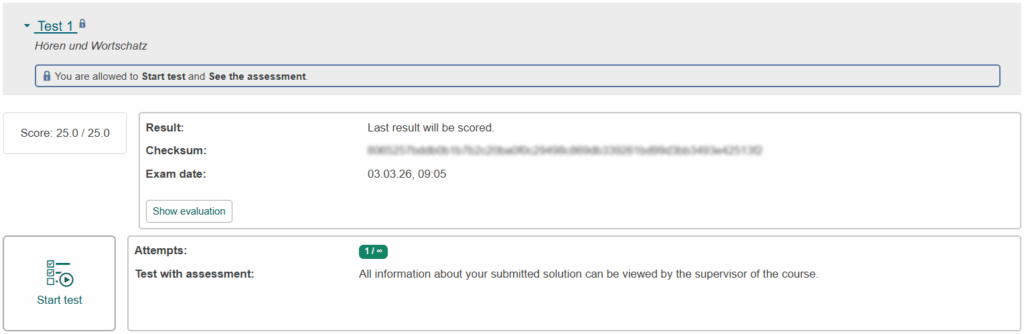
In the middle of the second week, we had a ten-minute test worth 25 points, and I was thrilled to score a perfect 25 out of 25. The questions were very similar to the exercises we practiced during class, which made the assessment feel quite easy. This course really teaches you a lot until you reach the point where you find everything manageable.
3rd Week
This week, we focused on how to talk about time and the calendar and studied the names of the twelve months and the four seasons. We also expanded our vocabulary to include the different rooms and places in a house, and to help us describe our lives more accurately, we studied how to form the past tense of verbs. Additionally, we learned how to write a basic email and spent time practicing dialogues to strengthen our speaking skills.
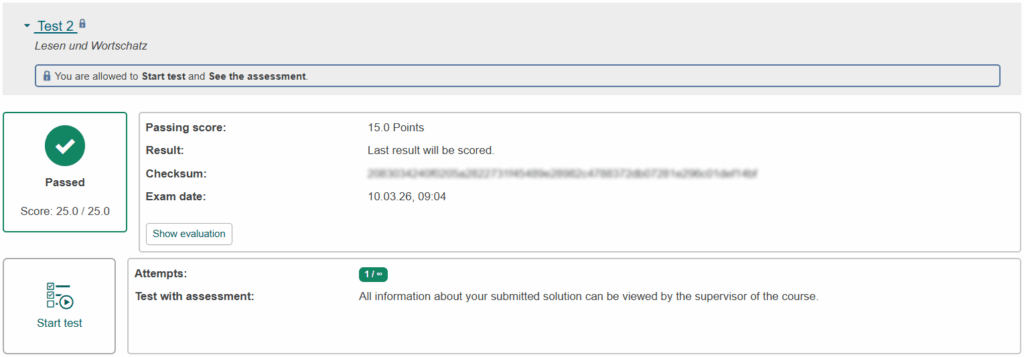
To finish the lesson, we took a 25-minute test. We had to read a story about German food and answer some matching questions. The text explained what people eat at different times of the day, like breakfast and lunch. We also had to look at pictures of food like grapes, cheese, and fries and write their names in German. It was a good way to practice what we learned about daily life in Germany.
Final Results and Enrollment Proof
Once you pass the course, you don’t have to worry about the paperwork. The Language Center shares your certificate directly with the Admission Office. You will also get your own copy, which serves as proof that you’ve met your conditional admission requirements just in time for the deadline!